Holiday bakingUpdated
Gingerbread House From Scratch: Tools That Keep the Walls Standing
Quick picks
- Best overallJoseph Joseph PrecisionPin Adjustable Rolling Pin
A beech wood pin with five pairs of removable rings that set the dough at 2, 4, 6, 8 or 10 mm, so every wall and roof panel rolls out the same thickness.
Check price on Amazon: Joseph Joseph PrecisionPin Adjustable Rolling Pin (opens in a new tab) - Best budgetWilton 12-Inch Disposable Decorating Bags, 100-count
Single-use 12 inch piping bags that work with or without a tip and take standard and large tips and couplers.
Check price on Amazon: Wilton 12-Inch Disposable Decorating Bags, 100-count (opens in a new tab) - Worth the upgradeKitchenAid Artisan 5-Quart Tilt-Head Stand Mixer, Onyx Black
A 10 speed tilt-head mixer with a 5 quart stainless steel bowl, supplied with a flat beater for stiff dough and a 6-wire whip for royal icing.
Check price on Amazon: KitchenAid Artisan 5-Quart Tilt-Head Stand Mixer, Onyx Black (opens in a new tab)
A gingerbread house from scratch is a weekend project. These are the tools for even panels, square walls and royal icing that holds, plus a pan for bakers who would rather not build.
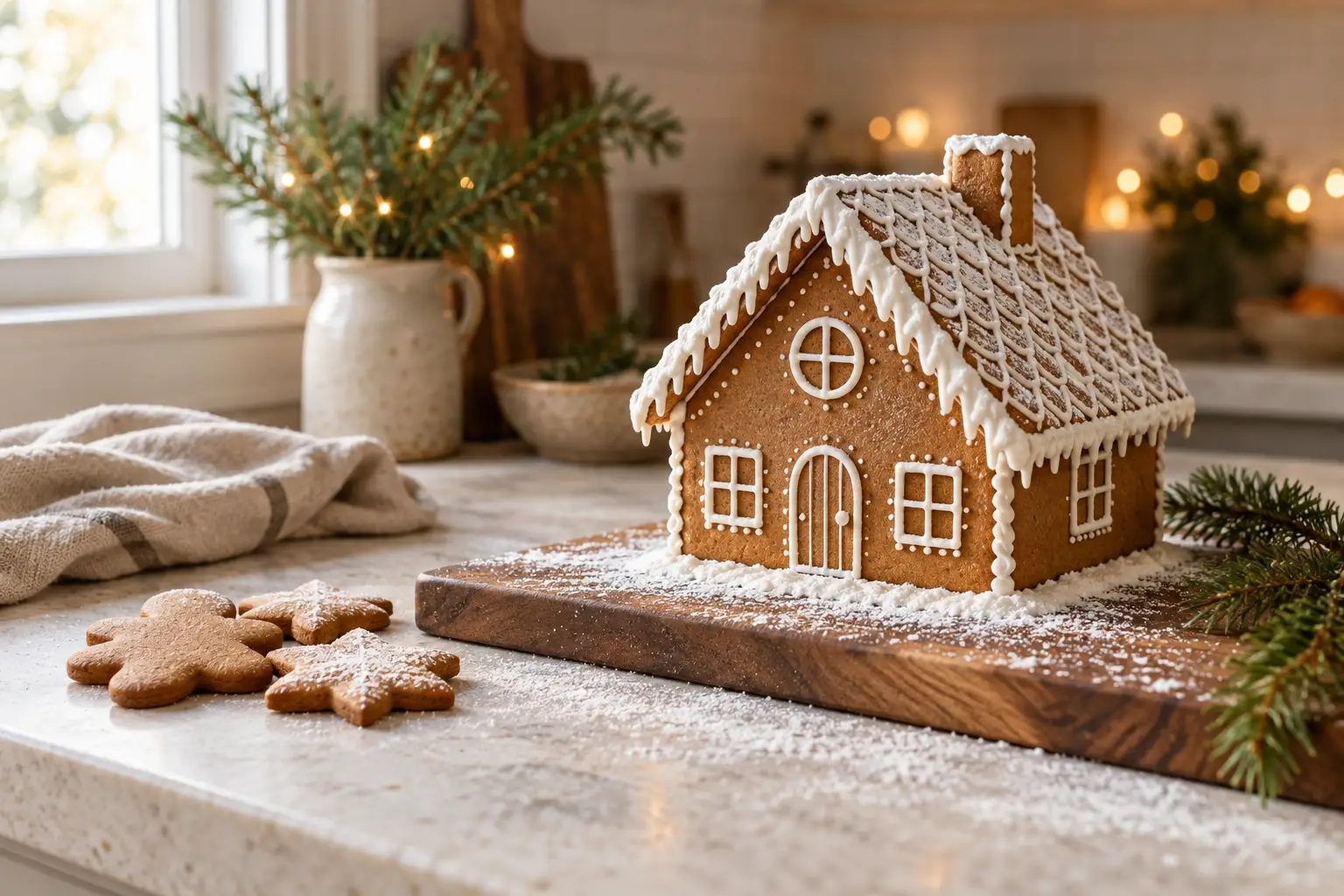
A gingerbread house from scratch is not an afternoon, and it is worth being honest about that up front. A kit hands you baked panels and a pouch of icing. Building your own means drawing a template, mixing a dough stiff enough to stand up, baking panels that dry overnight, and waiting for the icing to set before the roof goes on. Realistically, that is a weekend: template and bake on day one, build and decorate on day two.
What you get for it is a house at the size and shape you drew, which actually tastes of ginger. And almost every from-scratch failure comes down to two things: panels of different thicknesses, so the walls never meet square, or icing too soft to hold them.
Both are equipment problems as much as skill problems. Below are the tools behind even panels and icing that holds, then the template and the bake, day by day. If you would rather bake a gingerbread house than build one, there is a pan for that too.
The picks
Joseph Joseph PrecisionPin Adjustable Rolling Pin
A beech wood rolling pin, 16.5 by 2.5 by 2.5 inches, with five pairs of removable color-coded rings that hold the dough at 2, 4, 6, 8 or 10 mm. With the rings off, it works as a normal pin.
Even thickness is what keeps a gingerbread house square. Walls rolled to different thicknesses never meet flush, and the roof will not sit level. With the 6 mm rings on, just under a quarter inch, every panel comes out the same; the 4 mm rings then roll cookie dough for the rest of December.
Worth knowing: The rings ride on the counter at each end, so the sheet of dough you can roll is narrower than the pin is long: plenty for house panels, tight for one big slab. Hand wash only, never submerged, with an occasional rub of food-safe oil.
Skip it if: you already own a rolling pin you like. Two equal strips of wood laid either side of the dough do the same job as the rings.
Wilton 12-Inch Disposable Decorating Bags, 100-count
Single-use 12 inch plastic piping bags that work with or without a tip and take standard and large tips and couplers; Wilton rates each at about 1/2 to 1 cup of buttercream. Wilton's own page sells this bag as a 50-count set; this listing is the 100-count.
Royal icing is the glue, the mortar and the snow, and it sets hard in anything it is left in. Disposable bags mean a fresh bag per color and nothing to scrub. For gluing the walls you do not even need a tip: snip a small opening and pipe a thick line along each seam.
Worth knowing: They are single-use plastic. Royal icing dries at the opening if a bag sits, so fill each one part way, twist the top shut, and lay a damp cloth over the end between jobs.
Skip it if: you build one small house a year and already own a reusable bag you do not mind washing.
KitchenAid Artisan 5-Quart Tilt-Head Stand Mixer, Onyx Black
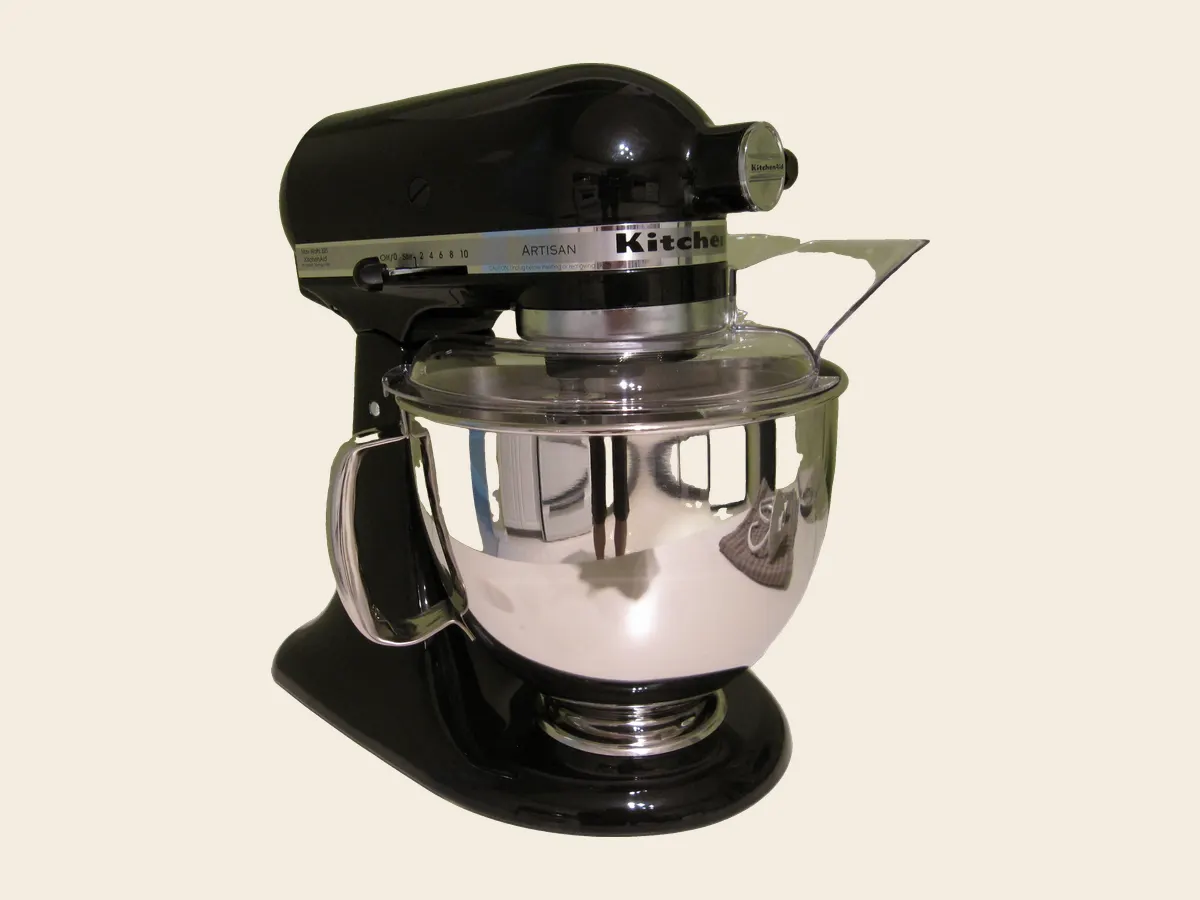
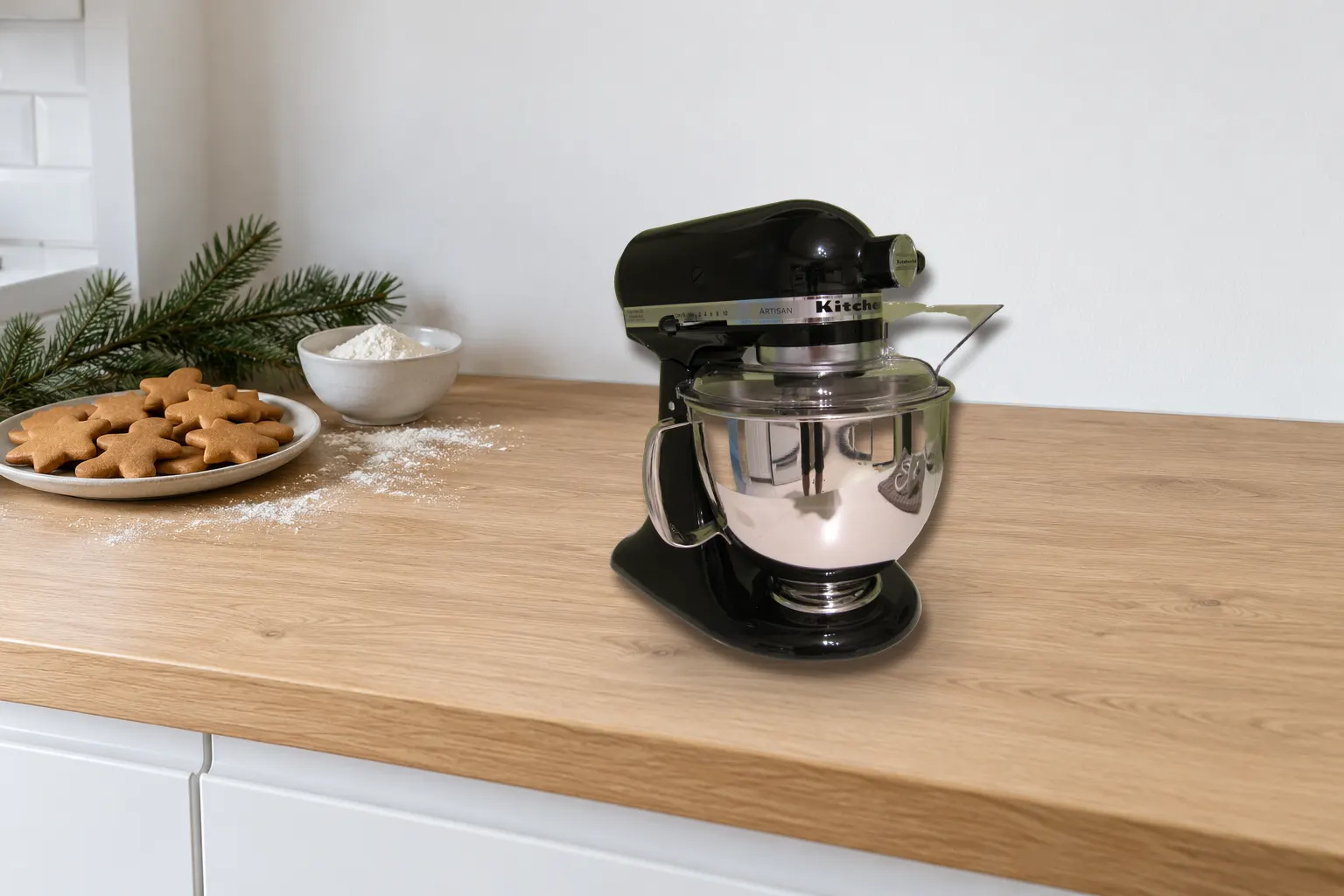
A tilt-head stand mixer with a 5 quart polished stainless steel bowl, 10 speeds and a 325 W motor, supplied with a coated flat beater, coated dough hook, 6-wire whip and pouring shield. KitchenAid gives it a Flour Power rating of 9 cups.
Construction gingerbread is a stiff, heavily floured dough, and royal icing has to be beaten for several minutes until it holds a firm peak. Both are tiring by hand and routine for a stand mixer, which keeps going while you cut out templates. If the house starts a December of cookie dough, icing and bread, it pays its way.
Worth knowing: It is large and heavy and lives on the counter: just under 14 inches tall and about 14 inches deep, and the tilt head needs clearance above it. A house can be built without it.
Skip it if: this is a once-a-year house. A hand mixer beats royal icing perfectly well, and a wooden spoon and some patience bring construction dough together.
Nordic Ware Naturals Half Sheet, 2-pack
Uncoated heavy gauge aluminum half sheet pans, 18 by 13 inches, made in the USA, with an encapsulated galvanized steel rim. This listing is a two-pack.
Panels need to bake flat, and a heavy pan resists the warping that would bend a wall. Cut the dough on parchment and slide the parchment onto the pan, so the shapes never stretch. Two pans let one batch cool while the next bakes.
Worth knowing: The pan sets the size of your biggest panel. Check that the roof pieces on your template fit inside 18 by 13 inches, with a margin, before you draw the final version.
Skip it if: you already own two heavy, light-colored sheet pans that sit flat in the oven.
OXO Good Grips Multi-Purpose Scraper and Chopper
A flat rectangle of stainless steel with a handle and a ruler along one edge.
Gingerbread spreads a little in the oven, so square each panel while it is still warm and soft: lay the template back on top and press the scraper straight down along each edge. The ruler confirms that opposite walls match.
Worth knowing: It cuts straight lines only. Windows, doors and curved eaves need the tip of a small, sharp knife.
Skip it if: there is a bench scraper in your drawer already.
Ateco 14-Piece Decorating Set (item 333)
Twelve stainless steel decorating tubes, one 12 inch flex bag with a hem and hanging loop, and a plastic coupler, packed with instructions and recipes in a clear plastic storage box. Made in Korea.
Gluing needs no tip, but decorating does: icicles along the eaves, shingles on the roof, trim around the door. The coupler lets you change tips without emptying the bag, and the box keeps the tubes together until next December.
Worth knowing: One reusable bag means one color at a time, washed out before the icing sets in it. The disposable bags above take standard tips and couplers, so the two work well together.
Skip it if: your decorating plan is candy pressed into icing. A snipped disposable bag handles that and the gluing.
Nordic Ware Gingerbread House Bundt Pan
A 9 cup cast aluminum Bundt pan in the shape of a house, with a nonstick coating. It weighs 1.8 lb, is oven safe up to 425F, and is made in America of domestic and imported materials; hand washing is recommended.
Some people want a gingerbread house on the table without the engineering, and Cake is one of Pinterest's own search suggestions for gingerbread house. This bakes a whole house from one batter, with no template and nothing to collapse.
Worth knowing: It is a cake, not a construction: no hollow house to fill with candy and no walls for children to decorate. A shaped pan only releases cleanly if every corner is greased and floured.
Skip it if: building the house is the point, especially with children or for a competition.
How they compare
| Pick | Best for | Key spec | Trade-off |
|---|---|---|---|
| Joseph Joseph PrecisionPin | Even walls and roof panels | Rings for 2, 4, 6, 8 and 10 mm | Rolling width is narrower than the pin |
| Wilton disposable bags | Gluing seams, one bag per color | 12 in, with or without a tip, 100-count listing | Single-use plastic |
| KitchenAid Artisan | Stiff dough and icing, every year | 5 qt bowl, 10 speeds, 6-wire whip | Large, heavy, needs headroom |
| Nordic Ware half sheets | Baking panels flat, two at once | 18 x 13 in heavy gauge aluminum, two-pack | Sets your largest panel size |
| OXO scraper | Squaring warm panels | Stainless blade with a ruler edge | Straight cuts only |
| Ateco 14-piece set | Icicles, shingles and trim | 12 tubes, coupler, 12 in flex bag | One reusable bag to wash |
| Nordic Ware house pan | A house without the building | 9 cup cast aluminum, oven safe to 425F | A cake, not a hollow house |
How to choose
Start from the template, not the tools
Decide the size of the house first. A small cottage with four walls and two roof panels fits on one half sheet; a two-story house with a porch needs more pans, icing and time. Pinterest’s own search suggestions include Template printable, and any printable works if its largest piece fits your pan.
Control thickness before anything else
If you buy one thing, make it something that sets the dough to a single thickness. It does more for a straight house than anything else here.
Plan for icing in quantity
A house uses more royal icing than most people expect, and the icing sets in whatever it touches. Count on several bags: one for gluing, one per decorating color, and a spare.
Buy the mixer for December, not for one house
The stand mixer earns its counter space if gingerbread is one project among many: cut-out cookies, buttercream, bread. For one house a year, a hand mixer does the icing. And for the house without the build, the shaped Bundt pan is the honest shortcut.
The from-scratch weekend, step by step
Day one, morning: the template. Draw the pieces on stiff paper or thin cardboard: a front and back with gable peaks, two side walls and two roof panels. Tape them together to check that they meet; a paper house is far easier to fix than a gingerbread one.
Day one: the dough and the bake. Use a construction gingerbread recipe, which is stiffer than cookie dough. Chill it, roll it onto parchment to one even thickness, cut around the templates and lift away the scraps. Slide the parchment onto a sheet pan and chill briefly before baking.
Day one, straight from the oven: trim. While the panels are warm and soft, put each template back on top and trim the spread with the scraper. Cool them on the pan, then leave them flat and uncovered overnight to stiffen.
Day two: assemble. Beat the royal icing to a stiff peak. Pipe a thick line along the base and side edges of two meeting walls, stand them up together and prop them with cans or jars. Add the other two walls, then leave the structure a few hours before the roof goes on.
Day two, later: decorate. Once the roof has set, pipe the eaves, press on the candy and dust the board with powdered sugar. Decorating a house that is still wet is how roofs slide off.
A from-scratch gingerbread house comes down to a weekend, a template and three things done well: even panels, stiff icing, and patience between the walls and the roof. If you are baking cookies the same week, the Christmas cookie baking tools guide uses most of this kit again.
Frequently asked questions
How thick should gingerbread house walls be?
Most construction recipes roll the dough somewhere between 1/8 and 1/4 inch, and a quarter inch is the sturdier choice for walls and roof. What matters more than the exact figure is that every panel is the same thickness, so the edges meet flush and the roof sits level. Rings on a rolling pin, or two equal strips of wood either side of the dough, take the guesswork out.
What holds a gingerbread house together?
Royal icing, made from powdered sugar with egg white or meringue powder and beaten until it is very stiff. It dries hard, which is why it works as glue. Icing that is soft or runny is the usual reason walls slide, so beat it until it holds a firm peak and keep the bowl covered with a damp cloth while you build.
How far ahead can I bake gingerbread house pieces?
Bake the panels at least a day before you build, because a panel that has dried overnight is stiffer and easier to stand up. Kept flat, dry and uncovered at room temperature, baked pieces generally hold for several days. The dough itself can be made a few days ahead and kept wrapped in the fridge.
Why does my gingerbread house keep collapsing?
The usual causes are icing that is too soft, panels of uneven thickness that do not meet squarely, and a roof that goes on before the walls have set. Build the four walls first, prop them with cans or jars, and give the icing a few hours before adding the roof. Decorate only once the whole structure is firm.
Can I use a gingerbread cookie recipe for a gingerbread house?
You can, but a construction recipe is the better choice. It is stiffer, with more flour and little or no leavening, so the panels bake flat, keep their cut shape and set hard. Soft cookie dough puffs and spreads, which turns a straight wall into a slightly curved one.
Keep reading

Holiday baking
Christmas Cookies Decorated With Royal Icing: What You Need
The royal icing kit for decorated Christmas cookies in simple shapes: piping tips and bags, a mixer for the icing, cutters, and somewhere flat to dry.

Holiday baking
Christmas Cookies: Baking Tools for Every Recipe on the List
The batch-baking kit for a December of Christmas cookie recipes: two sheet pans in rotation, a scoop, racks, a scale, a pin and cutters, and an honest word on stand mixers.
Baking essentials
Home Baking Essentials: The Complete Starter Checklist
The home baking essentials a new baker genuinely needs, in the order worth buying them, with the things most starter lists include that you can safely ignore.