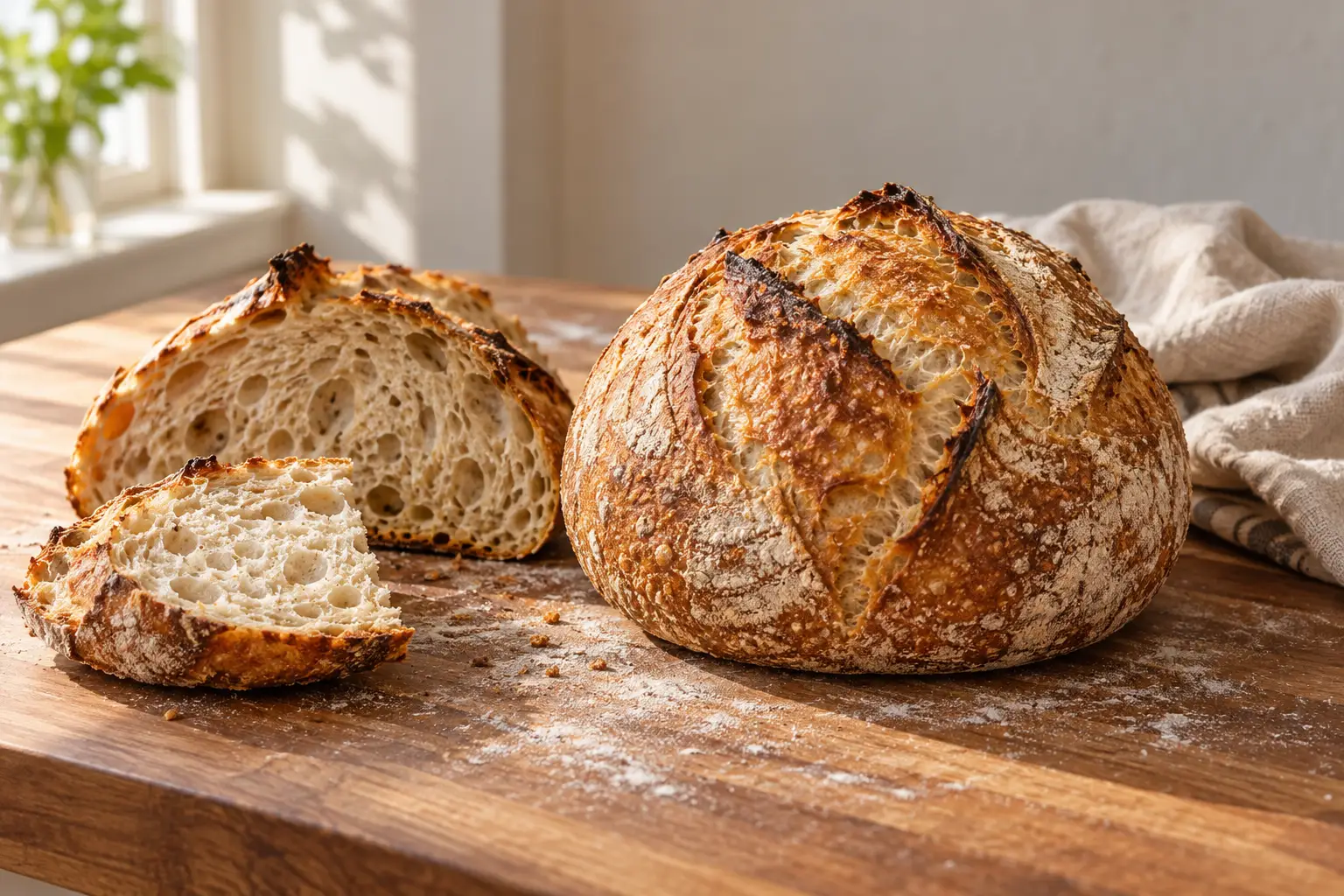
Baking essentialsUpdated
Sourdough Tools: What You Need, What Helps and What to Skip
Quick picks
- Best overallLodge Essential Enamel Cast Iron Dutch Oven, 6 Quart
Enameled cast iron with a heavy lid and six quarts of room, so it traps the steam a loaf needs and still works as an everyday pot.
Check price on Amazon: Lodge Essential Enamel Cast Iron Dutch Oven, 6 Quart (opens in a new tab) - Best budgetLodge Cast Iron Combo Cooker, 3.2 Quart
A 3.2 quart bare cast iron pot whose 10.25 inch skillet lid flips over to become a shallow base for loading the loaf; made in the USA.
Check price on Amazon: Lodge Cast Iron Combo Cooker, 3.2 Quart (opens in a new tab) - Worth the upgradeStaub Cast Iron 5.5-Quart Round Dutch Oven, Cherry
Staub rates this 5.5 quart enameled pot oven safe to 500F, with a textured black matte interior that needs no seasoning; made in France.
Check price on Amazon: Staub Cast Iron 5.5-Quart Round Dutch Oven, Cherry (opens in a new tab)
The sourdough tools that matter, starting with the one real piece of equipment, a heavy lidded pot: which Dutch oven suits which baker, and what to skip.
Sourdough attracts equipment the way few other hobbies do, and the reason is structural: it is a slow process with a lot of variables, so every problem has a gadget marketed at it. Search for sourdough tools and you get lists of thirty items, most of them optional.
The honest split is short. Four things are required, and three of them are probably in the cupboard already. A handful genuinely help. Everything else buys convenience, repeatability or looks, which are legitimate things to buy and are not the reason a first loaf comes out dense.
The one piece of real equipment is a heavy lidded pot, so that is the purchase worth thinking about and where this guide starts: which Dutch oven suits which baker, then the small tools worth adding, then what you can skip.
The picks
All three Quick picks are pots, because the pot is the only purchase that changes the bake itself. They do the same core job, trapping the loaf’s own steam, and differ in how you load them, what else they cook and how much care they ask for.
Lodge Essential Enamel Cast Iron Dutch Oven, 6 Quart
An enameled cast iron pot with a heavy lid, six quarts.
The pot is required for a physical reason. For the first part of the bake the loaf needs to sit in its own steam, which keeps the crust soft long enough for the loaf to expand fully. A home oven cannot hold that steam; a heavy lid can. Six quarts takes a standard round loaf with room to lower it in on a parchment sling, and because enamel skips the seasoning routine, the same pot makes soup, braises and tomato sauce the rest of the week.
Worth knowing: Enamel can chip if it is knocked against an oven rack, and lid knobs carry their own temperature limit. Check the rating that comes with the pot before preheating it empty at the high heat most sourdough recipes call for.
Skip it if: You already own a heavy, oven-safe pot of five to seven quarts with a lid that fits well. That pot will bake the same loaf.
Lodge Cast Iron Combo Cooker, 3.2 Quart
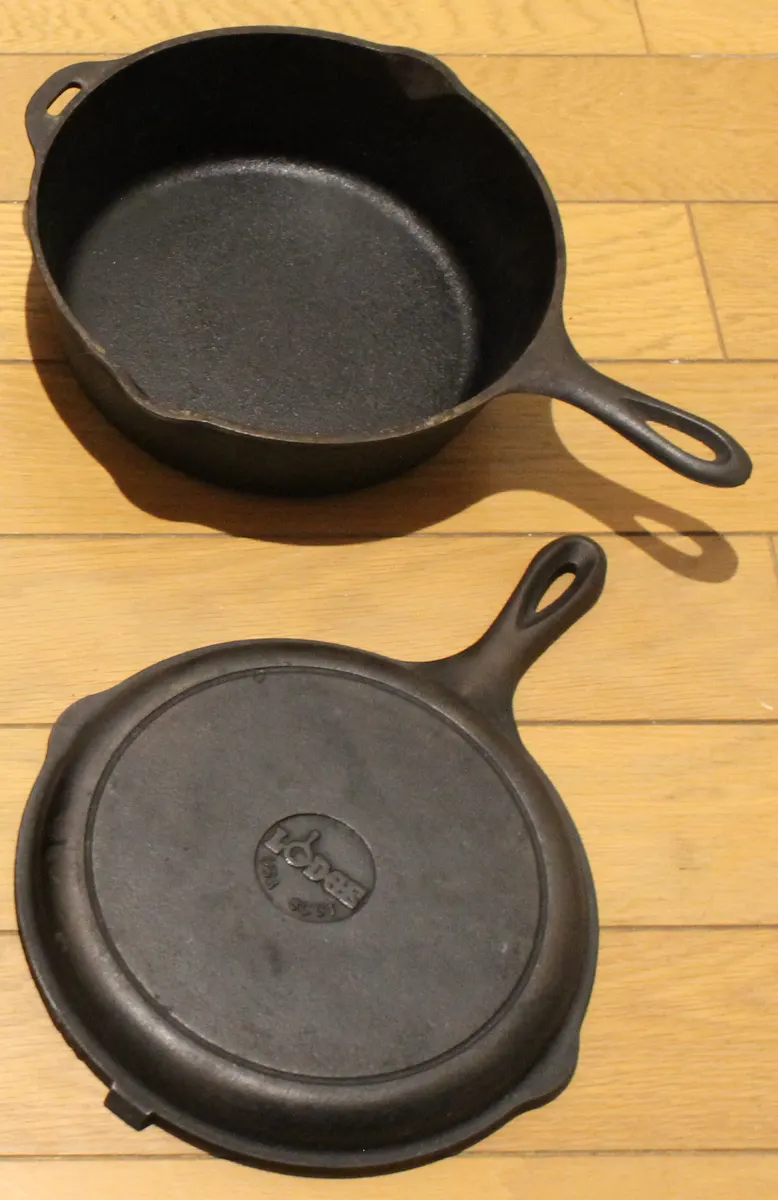
A 3.2 quart deep cast iron pot with a 10.25 inch skillet that doubles as the lid (Lodge model LCC3). Seasoned with vegetable oil, made in the USA, and listed by Lodge for induction, oven, grill and campfire.
The design solves the most nerve-racking moment in sourdough. Turn it upside down: the shallow skillet becomes the base and the deep pot becomes the lid, so the loaf goes down onto a flat, open surface instead of into a deep well of hot iron, and scoring is easier because nothing is in the way. There is no knob to worry about, and it costs less than either enameled pot here.
Worth knowing: It is bare cast iron, so it wants hand washing, drying and a light oiling, and it weighs 12.85 lb. The deep half is sized for a modest round loaf; a large boule or a long oval loaf will be tight.
Skip it if: You want one pot for bread and for long, acidic braises, which are hard on bare seasoning. Or your recipe makes large loaves.
Staub Cast Iron 5.5-Quart Round Dutch Oven, Cherry
A 5.5 quart round enameled cast iron Dutch oven with a textured black matte interior that needs no seasoning and a heavy, tight-fitting lid. Staub rates it oven safe to 500F and suitable for all stovetops, induction included; made in France.
This is the steam-trapping of the Lodge enamel with the heat question settled in writing. Staub states the 500F rating for the pot, which covers the preheat most sourdough recipes use, and a black interior hides the browning that repeated empty preheats leave behind. It suits the baker who will also use it most nights for stews and braises and wants one pot for decades.
Worth knowing: For bread alone it does nothing the Combo Cooker does not: the self-basting bumps under the lid are for braising, not loaves. It is dishwasher safe but Staub recommends hand washing, and 5.5 quarts is a little smaller than the Lodge's six.
Skip it if: The pot is only ever for bread. The Combo Cooker bakes the same loaf.
Those three settle the pot. The next three are the small tools that make the dough itself easier to read and handle.
OXO Good Grips Multi-Purpose Scraper and Chopper
A flat rectangle of stainless steel with a handle and a ruler along one edge.
Sourdough is wetter and stickier than most dough, and a scraper is what lets you divide, lift and shape it without tearing the gluten you spent hours building. It also clears the bench afterward, which with sourdough is not a small job.
Worth knowing: The edge is blunt by design, so it presses through dough rather than slicing it. That is what stops it scarring the counter.
Skip it if: You already own a metal bench scraper of any kind. They all do this.
Etekcity Food Kitchen Scale, 11 lb
A flat digital scale that reads in single grams, switches to ounces, and weighs up to 11 lb.
Not optional here, unlike some baking. Sourdough recipes are written in baker's percentages, and hydration, the ratio of water to flour, decides whether the dough is workable or a puddle. Volume measurement cannot express it. Single-gram readings are the specification that matters, and this reads in single grams.
Worth knowing: Single grams is right for flour, water and starter, but coarse for a gram or two of salt in a very small batch. For a loaf-sized recipe it is fine.
Skip it if: You already weigh in grams on a scale you trust.
Lavatools Javelin PRO Instant Read Thermometer
A folding probe thermometer that settles in about two seconds, with a backlit display that rotates itself and an IP65 water resistance rating.
Dough temperature drives fermentation speed more than elapsed time does, which is why the same recipe takes four hours in August and eight in January. Probe the dough at the start of bulk fermentation and the timings in a recipe start to make sense. It also answers the other question every new baker has, whether the loaf is baked through, by reading its center.
Worth knowing: It measures; it does not warm. If the dough reads cold, an oven with just the light on is still the fix.
Skip it if: You bake in a room that holds a steady temperature all year and your loaves already behave.
How they compare
| Pick | Best for | Key spec | Trade-off |
|---|---|---|---|
| Lodge Essential Enamel Dutch Oven, 6 Quart | One pot for bread and dinner | Six quarts, enameled, heavy lid | Check the knob rating; enamel can chip |
| Lodge Cast Iron Combo Cooker, 3.2 Quart | Bread-first bakers who want easy loading | Skillet lid flips to a shallow base | Bare iron care, 12.85 lb, modest loaf size |
| Staub 5.5-Quart Round Dutch Oven | A lifetime pot that also bakes bread | Oven safe to 500F, no-seasoning interior | More pot than bread alone needs |
| OXO Multi-Purpose Scraper | Dividing and shaping wet dough | Stainless blade with a ruler edge | Blunt edge by design |
| Etekcity Kitchen Scale, 11 lb | Hydration and baker’s percentages | Single grams, 11 lb capacity | Coarse for tiny quantities |
| Lavatools Javelin PRO | Dough and loaf temperature | Settles in about two seconds | Measures, does not warm |
How to choose
Start with the pot you already own
If there is a heavy, oven-safe pot with a tight lid in the cupboard, bake your first ten loaves in it before buying anything.
Pick a size for the loaf you bake
Five to seven quarts, round, fits the standard round loaf most recipes make. The Combo Cooker’s 3.2 quarts is enough for a modest loaf and not for a big one. If you want long oval loaves, none of these round pots is ideal.
Decide how you want to load it
Lowering soft dough into a deep pot at full heat is where beginners burn wrists. A parchment sling helps with any pot. The Combo Cooker removes the problem by putting the loaf on the shallow half.
Decide what else it will cook
Bread only: the Combo Cooker. Bread and everything else: enamel, either the Lodge or the Staub. Long tomato braises are hard on bare seasoning and easy on enamel.
Check the heat rating
Most sourdough recipes preheat the pot empty, very hot. Bare iron has no knob to worry about. With enamel, use the maker’s stated rating; Staub gives 500F for this pot.
Actually required
A glass jar with a loose lid for the starter (straight sides show the rise), a digital scale, a mixing bowl big enough for the dough to double, and a heavy lidded pot. That is the whole required list.
Genuinely helps
A banneton. The round cane basket supports the shaped loaf during its final rise so it holds its shape, and leaves the familiar spiral. A bowl lined with a well-floured tea towel does the same job, slightly less neatly. Worth buying if you bake weekly.
A lame, or a razor blade. Scoring controls where the loaf expands; an unscored loaf tears at its weakest point. The blade does the work, the handle is convenience.
A straight-sided container for bulk fermentation, marked so you can read the rise as a percentage rather than guessing.
Skip
A proofing box, unless you bake all year in a cold house. An oven with the light on does the same thing.
A starter with a name and a pedigree. Wild yeast and bacteria are ambient, and any starter fed regularly with your flour adapts to its new home. A friend’s spoonful, or flour, water and patience, both work.
Dough whisks and interchangeable lame handles. Pleasant, unnecessary.
Specialty flours before you have made a plain loaf. Whole grain and rye absorb water differently and change the hydration you have just learned. Learn the plain loaf first, then vary one thing.
If the habit sticks, the two later upgrades are a long serrated bread knife, because a good crust defeats a short or dull one, and a baking steel if you ever move to open baking or pizza.
The honest summary
You can bake a genuinely good sourdough loaf with a jar, a scale, a bowl, a scraper and a lidded cast iron pot. When a first loaf is dense, the cause is almost always under-fermented dough, and no equipment fixes that. A thermometer helps you see it coming.
Frequently asked questions
Do you need a Dutch oven to bake sourdough?
Not strictly, but it is the simplest way to get a good loaf at home. For the first part of the bake the dough needs to sit in its own steam so the crust stays soft while the loaf expands, and a heavy lid holds that steam in a way a home oven cannot. Any heavy, oven-safe pot with a well-fitting lid does the same job.
What size Dutch oven is best for sourdough?
Five to seven quarts, round, suits the standard round loaf most beginner recipes make. A smaller pot such as a 3.2 quart combo cooker works for a modest loaf but gets tight with large or long loaves. Bigger than seven quarts adds weight without helping the bread.
Is enameled or bare cast iron better for sourdough bread?
Both trap steam equally well, so the bread does not care much. Bare cast iron needs seasoning and hand drying but has no enamel to chip; enameled iron skips the seasoning and handles acidic stews, but check its stated temperature rating before preheating it empty.
What tools does a sourdough beginner actually need?
A jar for the starter, a digital scale that reads in grams, a large mixing bowl and a heavy lidded pot. A bench scraper and a probe thermometer are the next two worth adding. A banneton, a lame and a proofing box can all wait.
Keep reading
Baking essentials
Home Baking Essentials: The Complete Starter Checklist
The home baking essentials a new baker genuinely needs, in the order worth buying them, with the things most starter lists include that you can safely ignore.
Fall baking
Fall Baking Ideas: 12 Bakes and the Kit Each One Actually Needs
Twelve fall bakes ordered by how much equipment they demand, from a one-bowl apple cake to overnight cinnamon rolls and a double crust pie, with the tools each needs.
Baking essentials
Home Baking Essentials as Gifts: What to Buy Someone Who Bakes
Gifts for bakers, worked out from the baker's side: the upgrades they will not buy themselves, the consumables they will finish, stocking stuffers, and what ends up in a drawer.