Coffee barUpdated
Coffee Bar Ideas for a Small Kitchen Counter
Quick picks
- Best overallOXO Brew Conical Burr Coffee Grinder, Silver
Stainless steel conical burrs with 15 settings plus microsettings, from espresso to French press, and a hopper that holds up to 12 oz of beans.
Check price on Amazon: OXO Brew Conical Burr Coffee Grinder, Silver (opens in a new tab) - Best budgetPlanetary Design Airscape Stainless Steel Coffee Canister, Medium
An opaque stainless steel canister that holds about 1 lb of beans, with a plunger lid that pushes out excess air and locks.
Check price on Amazon: Planetary Design Airscape Stainless Steel Coffee Canister, Medium (opens in a new tab) - Worth the upgradeFellow Stagg EKG Pro Electric Gooseneck Kettle, 0.9 L
A 0.9 L gooseneck kettle with variable temperature from 104 to 212F, a hold mode and a built-in brew stopwatch.
Check price on Amazon: Fellow Stagg EKG Pro Electric Gooseneck Kettle, 0.9 L (opens in a new tab)
How to build a coffee station in two feet of counter, in the order that actually matters, without giving up the space you cook on.
A home coffee bar is a storage problem pretending to be a design project.
The photographs make it look like the hard part is choosing a color scheme. The hard part is that a coffee setup involves a machine, a grinder, beans, cups, filters, a scale, and something to knock the grounds into, and all of it has to live in a strip of counter you also need for making dinner.
Solve the storage and the design solves itself. This guide covers the five things worth buying, in the order they matter, then where the bar goes, how to make it look intentional, and how to dress it for December without losing the counter.
The picks
OXO Brew Conical Burr Coffee Grinder, Silver
An electric grinder with stainless steel conical burrs and 15 grind settings plus microsettings, from espresso to French press. The UV-blocking hopper holds up to 12 oz of beans, the grounds container is static-fighting stainless steel, and one-touch start remembers the last setting. 6.8 x 11.8 x 14.8 in; 5.6 lb.
The grinder is the one item on a coffee bar that changes the cup more than the machine does. Burrs produce even particles; a blade grinder produces dust and boulders that extract unevenly. This one covers French press to espresso on one dial, and one-touch start makes the morning routine a single button once the setting is right.
Worth knowing: At 14.8 inches tall it is the tallest thing on most coffee bars, so measure the gap under your wall cabinets. If espresso is the main drink, a grinder designed around espresso gives finer control near that end of the range.
Skip it if: Skip it if you only use pods or pre-ground coffee and are happy with the cup. A grinder only matters if you buy whole beans.
Planetary Design Airscape Stainless Steel Coffee Canister, Medium
A restaurant-grade stainless steel canister with a non-slip rubber base. Planetary Design says the medium size holds approximately 1 lb of beans, and its plunger lid pushes out excess air and locks. BPA free; hand wash.
Coffee is damaged by air, light, heat and moisture, and the bag it came in, folded over, is losing on all four. This answers them in one object: opaque steel for light, the plunger for air, a locking seal for moisture. A one pound size also builds in the rule that matters most, which is to buy smaller quantities more often.
Worth knowing: The plunger has to be pressed down onto the beans every time you close it, one more step than a clip lid. Hand wash only.
Skip it if: Skip it if your beans already live in an airtight container in a dark cupboard. The cupboard is doing the light-blocking.
Fellow Stagg EKG Pro Electric Gooseneck Kettle, 0.9 L
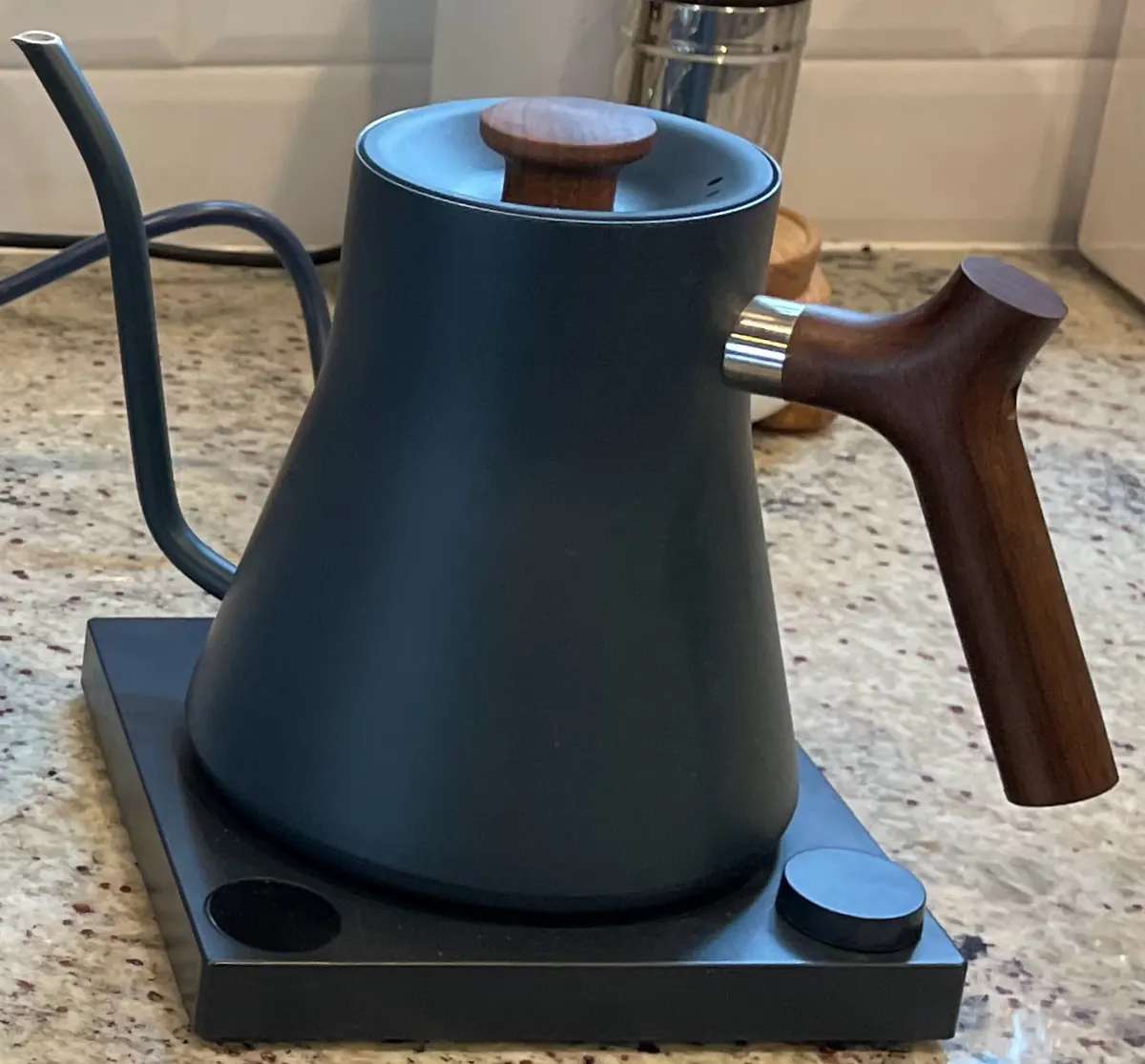
A 0.9 L (30 oz) gooseneck electric kettle in 304 18/8 stainless steel, with variable temperature from 104 to 212F, a hold mode that keeps water hot for 15, 30, 45 or 60 minutes, and a built-in brew stopwatch. 1000 to 1200 W; 11.10 x 6.77 x 7.7 in.
For pour-over, a gooseneck is not an affectation, it is flow control: a thin, steady stream you can put exactly where you want it. This one adds the two other things pour-over asks for, a set temperature and a timer, so the routine needs no thermometer and no phone.
Worth knowing: It is a single-purpose upgrade. 0.9 L covers a pour-over or two but is small for a household that also wants a pot of tea, and the base needs its own socket on the coffee bar.
Skip it if: Skip it if you do not brew pour-over. For drip, pods or espresso, an ordinary kettle or none at all is fine.
Two smaller pieces keep the rest of the bar in order.
OXO Good Grips 10-Piece POP Container Set
Ten stackable airtight canisters in mixed sizes with a push button lid.
The rest of a coffee bar is small loose things: filters, sugar, cocoa, tea, the decaf you open twice a month. Square canisters stack without the wasted gaps between round jars, and they get the branded bags off the counter, which is half of making the corner look intentional.
Worth knowing: They are clear, and light is not kind to coffee. Use them for filters, sugar and tea, or keep them in a cupboard, and put the beans in something opaque.
Skip it if: Skip it if one bag of beans is the only thing on your coffee bar.
OXO 6 lb Precision Scale with Timer
A 6 lb scale that measures from 0.5 g in 0.1 g steps, in grams, ounces and pounds, with a tare function, a built-in timer for pour-over, an auto shut-off that can be disabled while the timer runs, and a non-slip silicone mat. Four AAA batteries included.
Pour-over and espresso are ratios, a weight of coffee to a weight of water, and a scale is how you repeat a good cup on purpose rather than by luck. It is small and flat, so it slides under the machine or into the drawer when not in use.
Worth knowing: It runs on batteries. If you brew drip coffee by the scoop and like it, a scale adds a step without changing much.
Skip it if: Skip it if you already own a kitchen scale and do not need the timer or the tenth-of-a-gram steps.
How they compare
| Pick | Best for | Key spec | Trade-off |
|---|---|---|---|
| OXO Brew Conical Burr Grinder | Fresh, even grounds for any brewer | 15 settings plus micro; 12 oz hopper | 14.8 in tall; general-purpose at the espresso end |
| Airscape canister, medium | Keeping beans fresh on the counter | About 1 lb; plunger lid that locks | Plunger step every time; hand wash |
| Fellow Stagg EKG Pro | Pour-over | 104 to 212F; hold mode; stopwatch | Single purpose; 0.9 L |
| OXO 10-Piece POP set | Filters, sugar, tea | Ten stackable airtight canisters | Clear, so not for beans in daylight |
| OXO 6 lb Precision Scale | Ratios for pour-over and espresso | 0.1 g steps; built-in timer | Batteries; adds a step for drip |
How to choose: what goes on the counter, in order
The grinder, if you buy whole beans
Pre-ground coffee starts losing its aromatics within minutes of grinding and is flat within a week or two, which is why the same beans taste dramatically better ground fresh. If you are choosing between spending on the machine or the grinder, the grinder is the one that changes the cup more.
The machine
Pod machines have the smallest footprint and the least fuss. Drip machines suit households making several cups at once. Espresso machines are the largest and most demanding, and need more space than their dimensions suggest; the espresso setup guide covers that.
A scale, then a kettle
A scale only if you brew pour-over or espresso. A gooseneck kettle only if you brew pour-over. Everything else goes on the shelf or in the drawer.
Start by deciding where it goes
The right location is decided by three things, in this order.
Power. You need a socket, and you need it without a cable crossing a work surface. This alone usually eliminates most of the candidates.
Distance to water. Carrying a reservoir across the kitchen is a small daily annoyance that eventually stops you using the machine.
Distance to your cooking zone. Deliberately far. The coffee corner should be the piece of counter you least want to chop on, precisely because it is about to become permanently occupied.
Go vertical, immediately
Two feet of counter is not enough for a coffee setup laid out flat, and it does not have to be. The counter holds the things that need to be plugged in and nothing else.
A shelf above holds cups, which are attractive, stackable and used daily. This is the single change that makes a small coffee bar work.
A narrow drawer or box takes filters, spare baskets, the cleaning brush and the tamper. Small loose objects are what make a coffee corner look chaotic.
A rolling cart is the answer if you genuinely have no counter to give. The trade-off is that grinders vibrate, so a cart that wobbles will annoy you daily.
Beans, and the thing everybody gets wrong
An opaque container that pushes out the air and seals is the correct answer, and it takes up less room than the bag. Two of them, if you keep a decaf.
The thing people get wrong is the refrigerator. Coffee is porous and picks up odors, and every time you take it out it forms condensation. Room temperature, dark cupboard, sealed container.
Making it look intentional
Reduce the number of materials. Wood, cream ceramic, dark metal. Move the brightly branded plastic things into the drawer. A coffee corner reads as designed when it stops being a collection of logos.
Handle the cables. A cable clip run along the back edge of the counter takes ten minutes and is the highest-return job in this guide. Then add one small warm light for the hours when the overhead light is too bright or not on at all.
Dressing the coffee bar for December
A Christmas coffee bar is the same coffee bar with the shelf doing the work. The counter stays clear, because December is when you need it most.
Swap the mugs. Put the everyday cups away and bring down two or three holiday ones. The shelf is the display.
One run of greenery. A short garland or a few cut branches along the shelf edge, kept well away from the kettle spout and the hot top of the machine.
Stirrers in a jar. Candy canes or cinnamon sticks in a small jar beside the cups look seasonal and get used.
A holiday blend, in the canister. Seasonal beans still go in the opaque container, not in a decorative glass jar.
If you are hosting, the same corner can turn into a hot chocolate bar for the evening, borrowing the socket and the shelf.
The unglamorous last item
Somewhere to put the used grounds or the spent pods. If it is not within reach of the machine, the counter accumulates them. A small lidded container beside the grinder, emptied when you think of it, is the difference between a coffee bar that stays tidy and one that needs tidying.
Frequently asked questions
Where should a coffee bar go in a small kitchen?
Next to a socket, close to the sink, and away from the counter you cook on. In most small kitchens that is a corner or a dead-end run beside the refrigerator, which is poor counter for chopping and fine for standing at with a cup.
What do you need for a coffee bar at home?
The brewer, a burr grinder if you buy whole beans, an opaque airtight container for the beans, and a shelf above for cups. A scale and a gooseneck kettle only matter if you brew pour-over or espresso. Everything else goes in a drawer.
Should coffee beans be stored in the fridge?
No. Coffee is porous and picks up fridge odors, and every time the container comes out it gathers condensation. Keep beans sealed, at room temperature and out of the light, and buy smaller bags more often.
Is a burr grinder worth it for a home coffee bar?
Yes, if you buy whole beans. Burrs grind to even particles that extract evenly, while a blade grinder makes a mix of dust and chunks. If you are choosing between spending on the brewer or the grinder, the grinder changes the cup more.
How do you decorate a coffee bar for Christmas?
Decorate the shelf above it, not the counter you work on. Swap the everyday mugs for two or three holiday ones, run a little greenery along the shelf edge away from hot surfaces, and add a jar of candy canes or cinnamon sticks as stirrers.
Keep reading
Coffee bar
Espresso Setup at Home: Making It Fit a Small Counter
Espresso needs more space than the machine dimensions suggest. What the footprint really is, what to buy in what order, and when a smaller answer is the better one.
Holiday baking
Hot Chocolate Bar Ideas: How to Set One Up on a Small Counter
A hot chocolate bar for a Christmas party or a quiet December: how to keep a batch hot, store the toppings and fit the whole setup on a small counter.
Storage and pantry
Small Kitchen Storage Ideas: Where the Space Actually Is
Small kitchens are rarely short of space. They are short of reachable space. Where the unused volume hides, what to put in it, and what no organizer will fix.