Coffee barUpdated
Espresso Setup at Home: Making It Fit a Small Counter
Quick picks
- Best overallBreville Bambino Plus Espresso Machine BES500BSS
ThermoJet heating that Breville says is ready in 3 seconds, PID temperature control and automatic milk texturing, in a body 7.4 inches wide.
Check price on Amazon: Breville Bambino Plus Espresso Machine BES500BSS (opens in a new tab) - Best budgetBreville Bambino Espresso Machine BES450BSS
The same ThermoJet heating, PID control and 54 mm portafilter as the Plus, with a manual steam wand, in a body 6.1 inches wide.
Check price on Amazon: Breville Bambino Espresso Machine BES450BSS (opens in a new tab) - Worth the upgradeBaratza Encore ESP Coffee Grinder, Black
A burr grinder with 40 mm conical steel burrs on a quick-release mount, 13 cm wide, with a dosing cup included.
Check price on Amazon: Baratza Encore ESP Coffee Grinder, Black (opens in a new tab)
Espresso needs more space than the machine dimensions suggest. What the footprint really is, what to buy in what order, and when a smaller answer is the better one.
The dimensions on an espresso machine’s box are misleading, and the gap between them and reality is why so many home setups feel cramped from the first week.
A machine that measures ten inches wide needs perhaps twice that in working space, because you have to put the portafilter down somewhere, knock the puck out somewhere, hold the cup somewhere, and reach the back to fill the reservoir. The machine is the smallest part of the footprint.
This guide covers two compact machines, the grinder that matters more than either, the scale that makes them repeatable, and two smaller answers that are the right choice for more people than the espresso aisle suggests.
The picks
Breville Bambino Plus Espresso Machine BES500BSS
A compact espresso machine with ThermoJet heating that Breville says is ready in 3 seconds, PID temperature control and a 15 bar pump. Its steam wand textures milk automatically, with adjustable temperature and texture. 54 mm portafilter; 64 fl oz water tank; 11.9 x 7.4 x 14.3 in; 1560 W. In the box: a 54 mm tamper, the Razor dosing tool, a 16 fl oz milk jug, and single and dual wall filter baskets.
PID control is for temperature stability, and a heater that is ready in seconds means no long wait between the shot and the milk. Automatic milk texturing is the reason to pick the Plus: it removes the hardest skill in home espresso for anyone who mostly drinks lattes. At 7.4 inches wide it leaves room for a grinder and a landing spot.
Worth knowing: It is still espresso. You need a grinder that can grind for it, a scale, and patience through a run of sour or bitter shots while you dial in. It is 14.3 inches deep, which is more than it looks on a shallow counter, and accessories need to be 54 mm.
Skip it if: Skip it if you drink espresso straight and never steam milk, or if you want to learn milk texturing yourself. The Bambino does both for less counter width.
Breville Bambino Espresso Machine BES450BSS
ThermoJet heating that Breville says is ready in 3 seconds, PID temperature control, a 15 bar pump and a 54 mm portafilter, with a manual steam wand. 47 fl oz water tank; 11.9 x 6.1 x 13.5 in; 1560 W. Includes single and dual wall filter baskets, a milk jug and a tamper.
It is the narrowest machine here at 6.1 inches, and on a small counter that inch and a bit over the Plus counts. The heating, temperature control and portafilter are the same as the Plus. If you drink straight espresso or americanos, the Plus's automatic milk system would sit unused.
Worth knowing: The steam wand is manual, so you learn to stretch and texture milk yourself, a second skill on top of pulling the shot. The tank is smaller, 47 fl oz against 64, so it needs refilling more often.
Skip it if: Skip it if lattes are the main drink and you want them consistent from the first week. The Plus textures the milk for you.
Baratza Encore ESP Coffee Grinder, Black
A burr grinder with 40 mm conical steel (M2) burrs on a quick-release burr mount, a 300 g (10.6 oz) bean hopper and a 120 g (4.2 oz) grounds bin. 70 W; 13 x 15 x 34 cm (W x D x H). A dosing cup is included.
This guide's buying order puts the grinder first, for the reasons below, and this is the grinder the setup is built around. At 13 cm wide it sits beside either Bambino without crowding it, and the dosing cup means grinding into a cup and tipping into the portafilter rather than scattering grounds across the counter.
Worth knowing: 34 cm tall, so check the clearance under your wall cabinets with the hopper lid lifted. It is a second appliance with its own cord and footprint, which on a small counter is the real trade-off of doing espresso properly.
Skip it if: Skip it if you are choosing the moka pot or AeroPress instead. A general-purpose burr grinder, like the one in the coffee bar guide, covers those.
The scale is what turns guessing into adjusting.
OXO 6 lb Precision Scale with Timer
A 6 lb scale that measures from 0.5 g in 0.1 g steps, in grams, ounces and pounds, with tare, a built-in timer, an auto shut-off that can be disabled while the timer runs, and a non-slip silicone mat. Four AAA batteries included.
Espresso is a ratio: a weight of dry coffee in, a weight of liquid out, in a time. Without a scale you are adjusting one unknown against another. Tenth-of-a-gram steps and a built-in timer cover both sides of that, and the shut-off can be switched off so it does not go dark mid-shot.
Worth knowing: It runs on batteries, and space between a compact machine's drip tray and spout is tight, so check the clearance before planning to brew with the cup on the scale.
Skip it if: Skip it if you already own a scale that reads to 0.1 g.
And the two smaller answers, for when espresso is not the right fit.
AeroPress Original Coffee Press
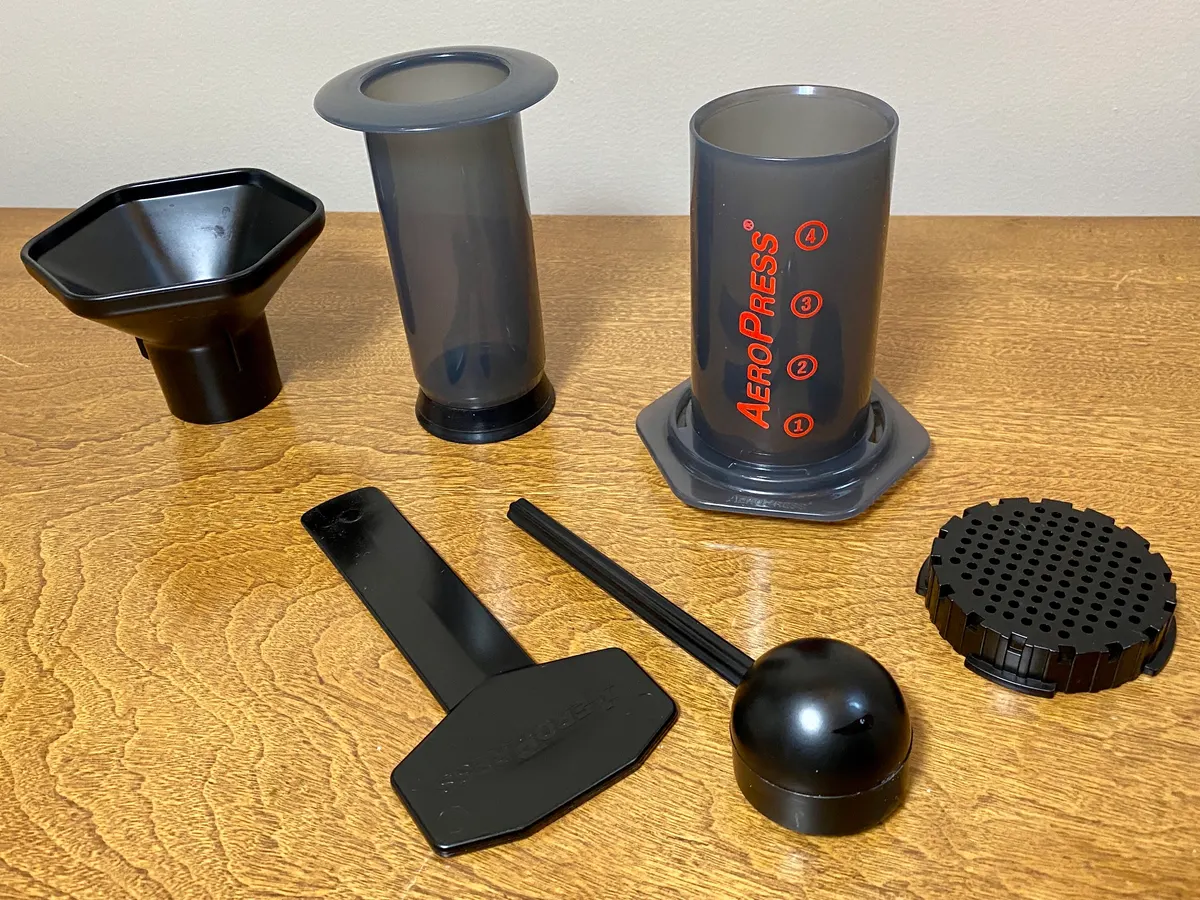
A manual coffee press with a 10 oz capacity (1 to 2 cups), 5.25 in high x 4.2 in wide and about 7.75 oz. BPA-free polypropylene; uses paper micro-filters, included with a stirrer and scoop. Top-rack dishwasher safe; made in the USA.
If you have less than two feet of counter to give, this is the honest answer. It lives in a drawer, needs nothing but a kettle, and makes a strong, concentrated coffee that works well in milk.
Worth knowing: It makes espresso-strength coffee, not espresso: there is no pump, and it makes one or two cups at a time.
Skip it if: Skip it if espresso itself, with steamed milk, is what you are after. It is a different drink.
Bialetti Moka Express, 3-Cup
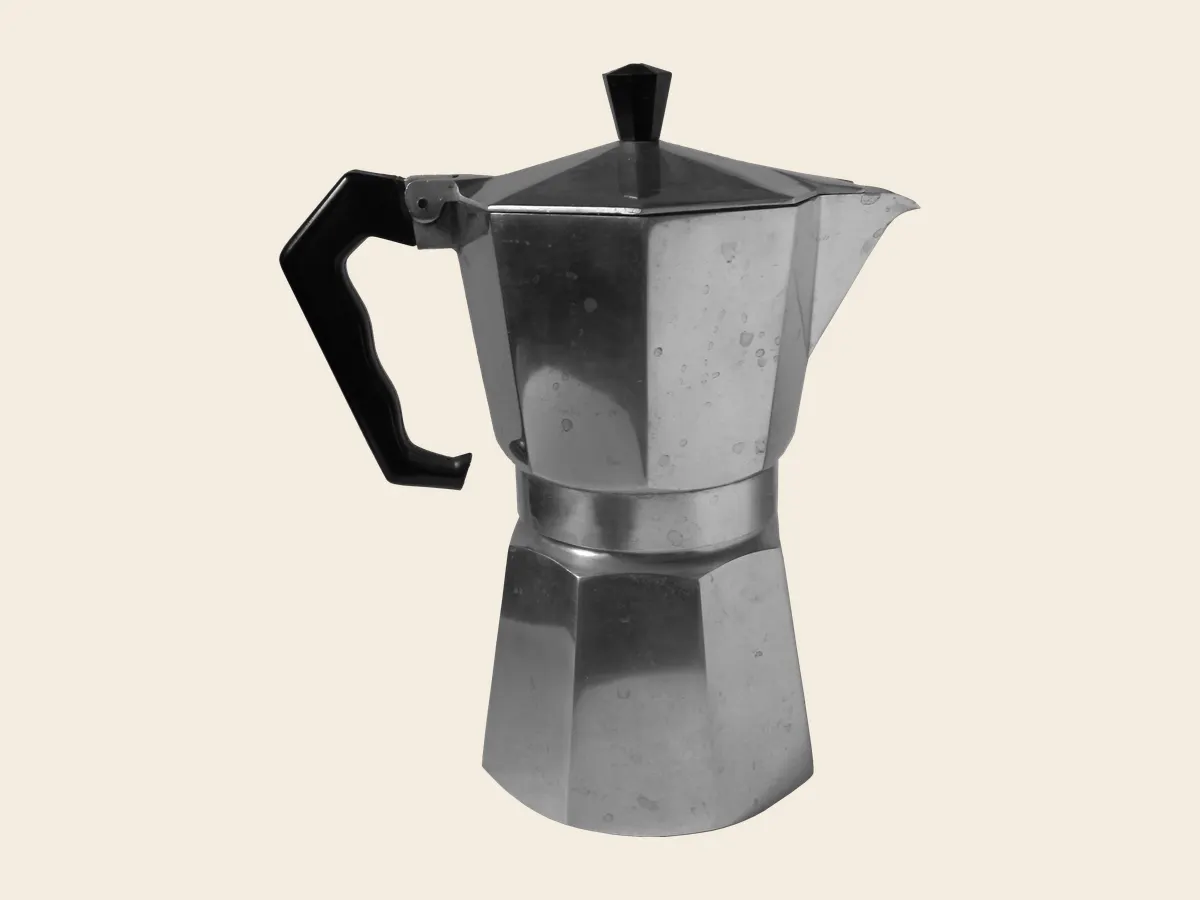
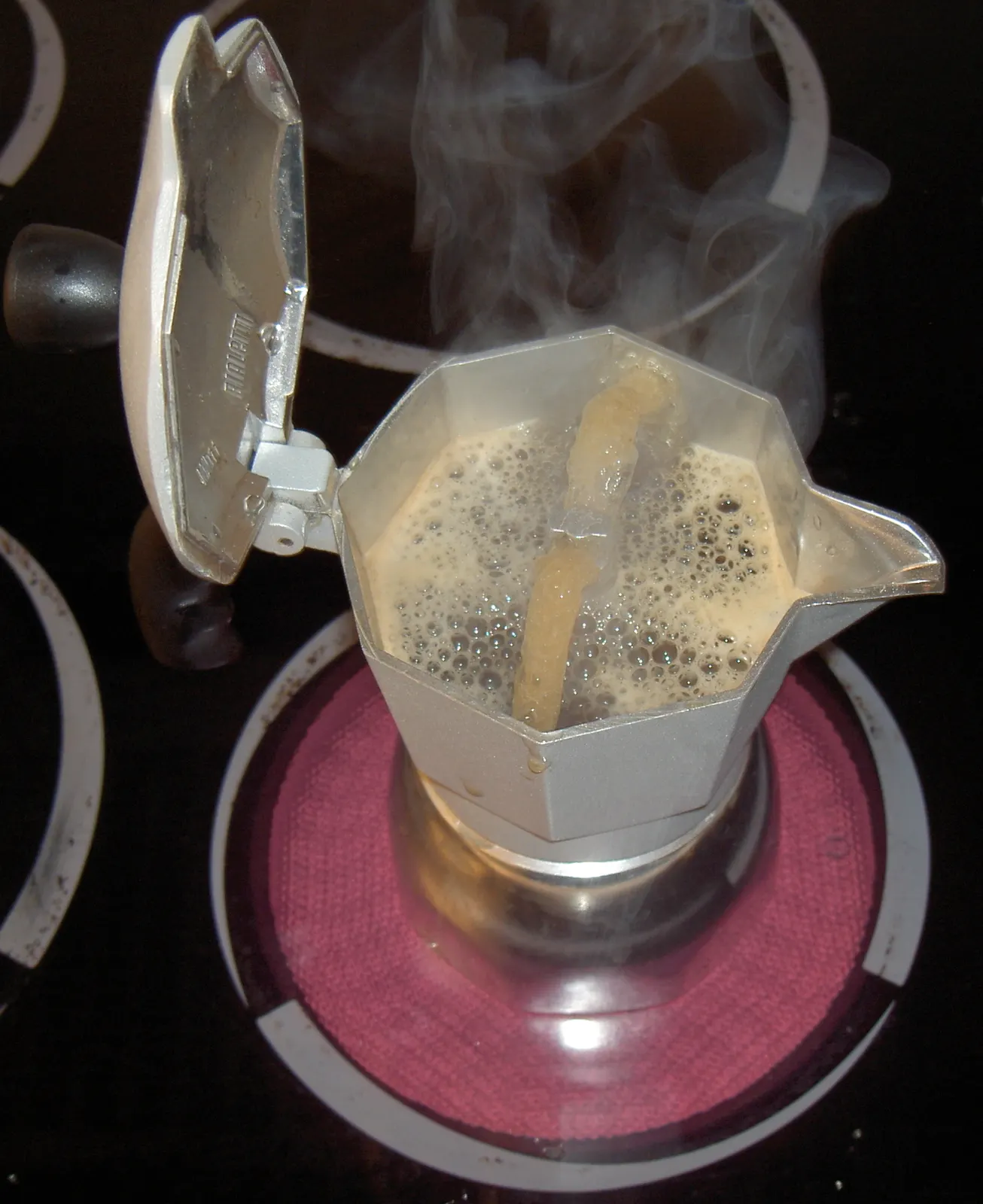
An aluminum stovetop coffee maker, 3 cup size (4.4 oz); Bialetti counts a cup as an espresso serving of about 2 oz. It works on gas or electric stovetops; induction needs Bialetti's separate adapter plate. Rinse with warm water after use, no soap or dishwasher. Made in Italy.
Strong, concentrated coffee from the stove, stored in a cupboard, with no counter footprint at all, and it costs very little. For someone who wants a short, strong coffee to drink straight or top with hot milk, it is the smallest answer there is.
Worth knowing: Three cups by Bialetti's count is about 4.4 oz, enough for one milky mug or two short coffees. It needs rinsing by hand with water only, and an adapter on induction.
Skip it if: Skip it if you cook on induction and do not want the adapter plate, or if you want milk foam, which a moka pot does not make.
How they compare
| Pick | Best for | Key spec | Trade-off |
|---|---|---|---|
| Breville Bambino Plus | Lattes without learning to steam | Automatic milk texturing; 64 fl oz tank | 7.4 in wide; still needs a grinder |
| Breville Bambino | Straight espresso, narrowest counter | 6.1 in wide; manual steam wand | Milk is a skill to learn; 47 fl oz tank |
| Baratza Encore ESP | The grinder to buy first | 40 mm conical steel burrs | 34 cm tall; a second appliance |
| OXO 6 lb Precision Scale | Repeatable shots | 0.1 g steps; built-in timer | Batteries; tight under a compact spout |
| AeroPress Original | Strong coffee with no counter space | 10 oz; stores in a drawer | Not true espresso |
| Bialetti Moka Express, 3-Cup | Stovetop strong coffee | 3 cup (4.4 oz); gas or electric | Induction needs an adapter; no foam |
How to choose: buy in this order
The grinder first, and this is not the conventional advice. Espresso forces water through a compacted bed of coffee under pressure. If the particles are uneven, water races through the channels it carves and under-extracts the rest. This is called channeling, and it is the most common cause of home espresso tasting sour and bitter at once. A good machine with a bad grinder makes bad espresso; a modest machine with a good grinder makes decent espresso.
The machine second. What matters is temperature stability, steaming without a long wait, and easy cleaning. Choose between the two Bambinos on milk: automatic texturing for latte drinkers, manual for everyone else.
The scale third. A small flat one with a timer.
A knock box fourth. Not optional. If the pucks go to a bin across the room, the counter will be permanently dusted with coffee.
Measure the working zone, not the machine
Mark out the machine, a dinner-plate-sized landing area for the portafilter, the grinder right beside the machine, a knock box within reach, and clearance above for the tank lid and behind for the plug. That usually totals two to three feet of counter used for nothing else. If you have it, espresso works at home. If not, read the last section first.
The space-saving decisions that are worth it
Put the grinder on a small tray so it pulls forward to use and pushes back after.
Hang the accessories. Tamper, brush and cloth on a small rail. Loose accessories are usually why a counter feels full.
Cups on a shelf above. Never on the counter.
The learning curve, honestly
Expect the first few weeks to involve adjusting. Each new bag of beans needs the grind dialed in again, and early shots are often sour (too coarse, too fast) or bitter (too fine, too slow). Both Bambinos include dual wall baskets, designed to be more forgiving while you learn; the single wall baskets reward a good grinder. Cleaning is part of the routine too: the group head wiped, the steam wand purged and wiped every time, the grinder brushed out now and then. Keep the cleaning kit within reach or it will not happen.
When the honest answer is a smaller one
If you have less than two feet of dedicated counter, or you drink one cup a day and do not care about the process, or what you really want is milky coffee rather than espresso, the AeroPress or the moka pot is the better answer. A pod machine is another: the smallest footprint, no skill required, less control.
None of these is a worse version of the same thing. They are different answers to the question of what you want in the morning, and two of them live in a drawer.
Frequently asked questions
What do I need for an espresso setup at home?
An espresso machine, a grinder that can grind fine and consistently enough for espresso, a scale that reads tenths of a gram, a tamper that fits the basket, and a knock box for the spent pucks. Most machines include a tamper and a milk jug.
Do I need a separate grinder for a Breville Bambino?
Yes. Neither Bambino has a built-in grinder, so you either grind fresh with a separate burr grinder or use pre-ground coffee in the dual wall basket. A grinder that can work at espresso fineness is what lets you use the single wall basket and adjust your shots.
Is the Bambino Plus worth it over the Bambino?
If you mostly drink lattes or flat whites, yes: the Plus textures milk automatically to a temperature and texture you set, and it has a larger 64 fl oz tank. If you drink espresso straight or want to learn milk steaming by hand, the Bambino does the same job in a narrower body.
How much counter space does an espresso setup need?
More than the machine. Allow room for the grinder beside it, a landing spot for the portafilter, a knock box and clearance to reach the water tank. In most small kitchens that adds up to two to three feet of counter used for nothing else.
Is a moka pot or AeroPress a good alternative to an espresso machine?
For many people, yes. Both make strong, concentrated coffee that works well with milk, and both store in a cupboard. Neither makes true pump espresso or steams milk, so they suit people who want strong coffee more than they want the espresso process.
Keep reading
Coffee bar
Coffee Bar Ideas for a Small Kitchen Counter
How to build a coffee station in two feet of counter, in the order that actually matters, without giving up the space you cook on.
Storage and pantry
Small Kitchen Storage Ideas: Where the Space Actually Is
Small kitchens are rarely short of space. They are short of reachable space. Where the unused volume hides, what to put in it, and what no organizer will fix.
Holiday baking
Hot Chocolate Bar Ideas: How to Set One Up on a Small Counter
A hot chocolate bar for a Christmas party or a quiet December: how to keep a batch hot, store the toppings and fit the whole setup on a small counter.